


Trials to limit berry detachment post-harvest
Trial conducted in Ragusa by the Agribios Testing Center
Variety: Black Magic
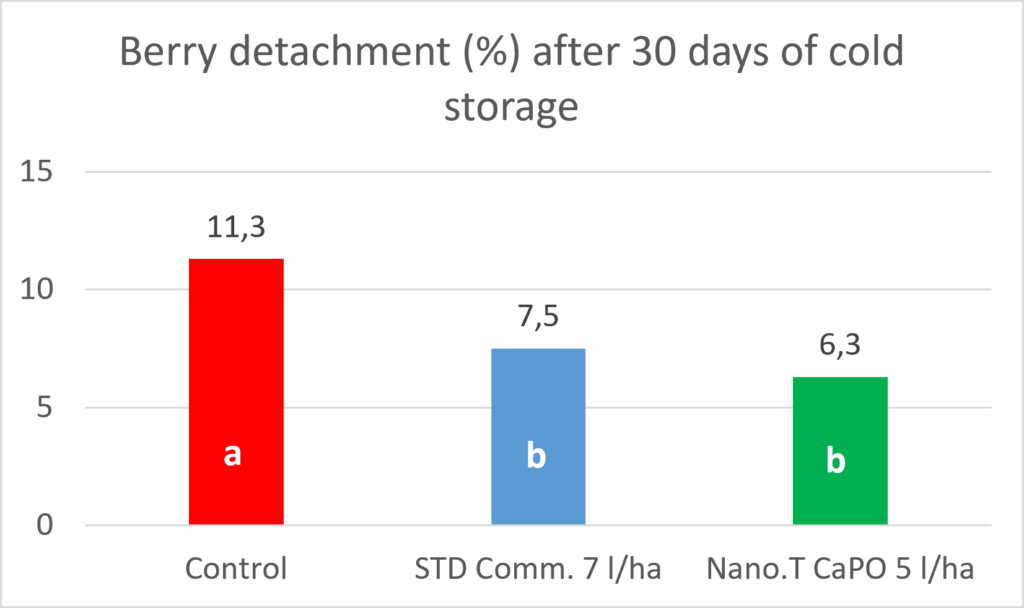
Detachment of the berries 30 days after harvest
end of July
The graph shows that the percentage difference in berry drop among the treated groups is not statistically significant, even though the amount of calcium applied in nano-form is much lower (p<0.05).
Specifically, four applications were made—at a rate of 5 L/ha for Nano.T CaPO and 7 L/ha for the commercial product—resulting in a total application of approximately 1 kg and 6 kg of calcium per hectare, respectively:
April 15: flowering
April 28: onset of berry enlargement
May 19: berry growth phase
June 8: 15 days before harvest
The NUE (which represents the amount of a nutrient absorbed by the plant relative to the amount actually applied) clearly favors the use of nano-calcium, given that the quantity of calcium supplied via Nano.T CaPO is only one-sixth of that provided by the commercial standard.
Conclusions
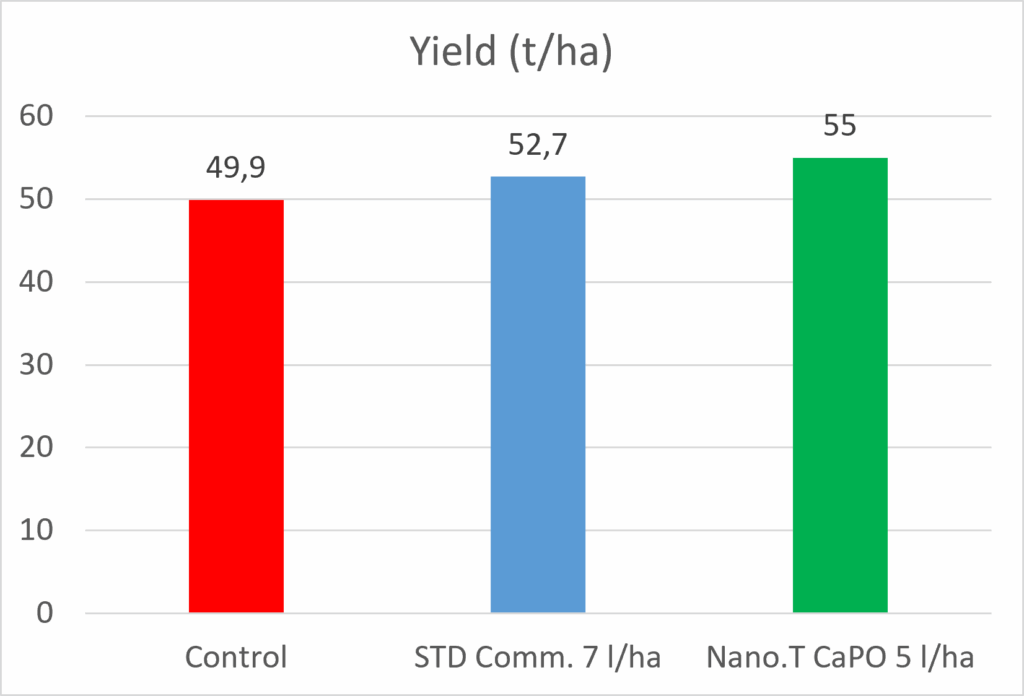
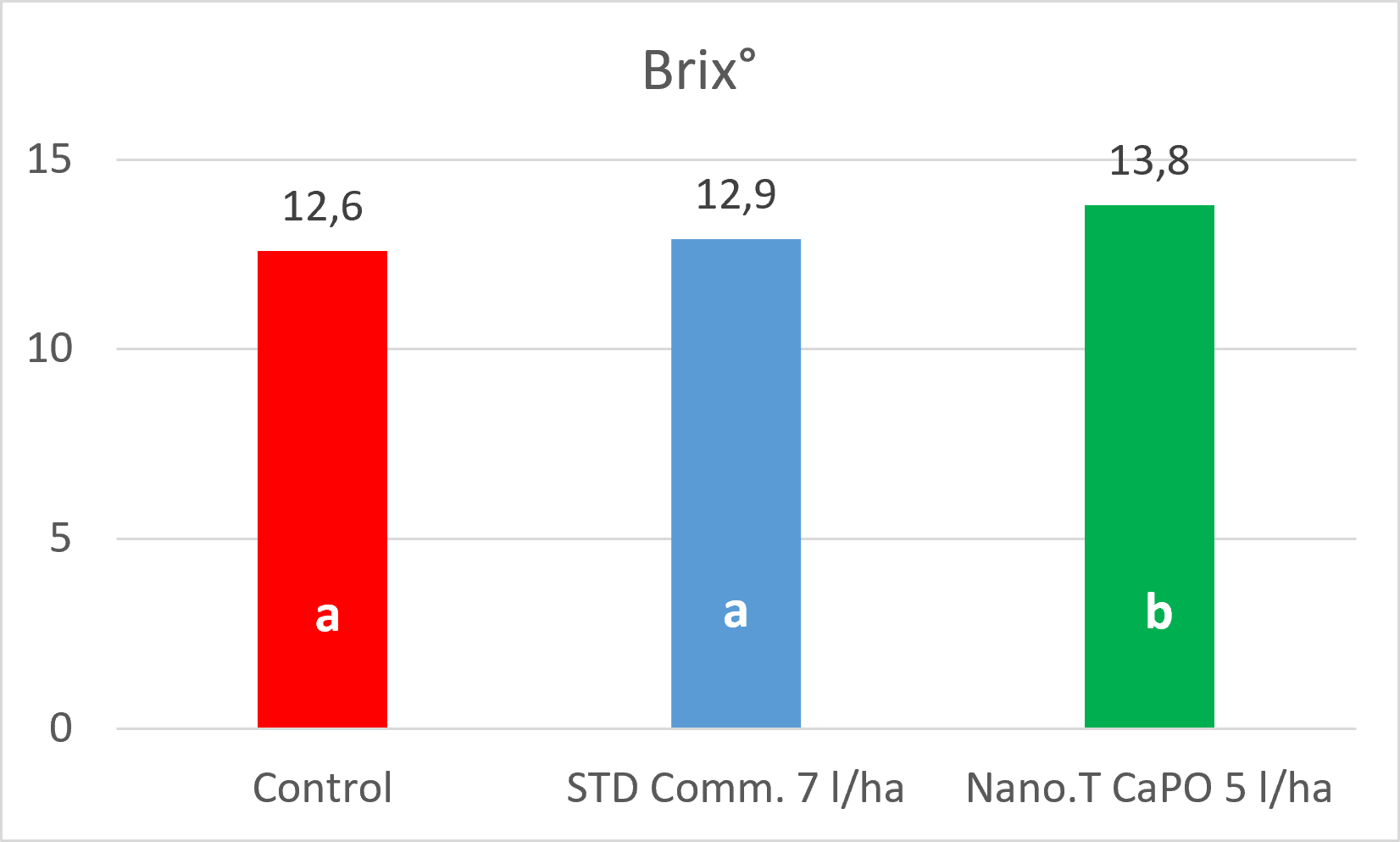
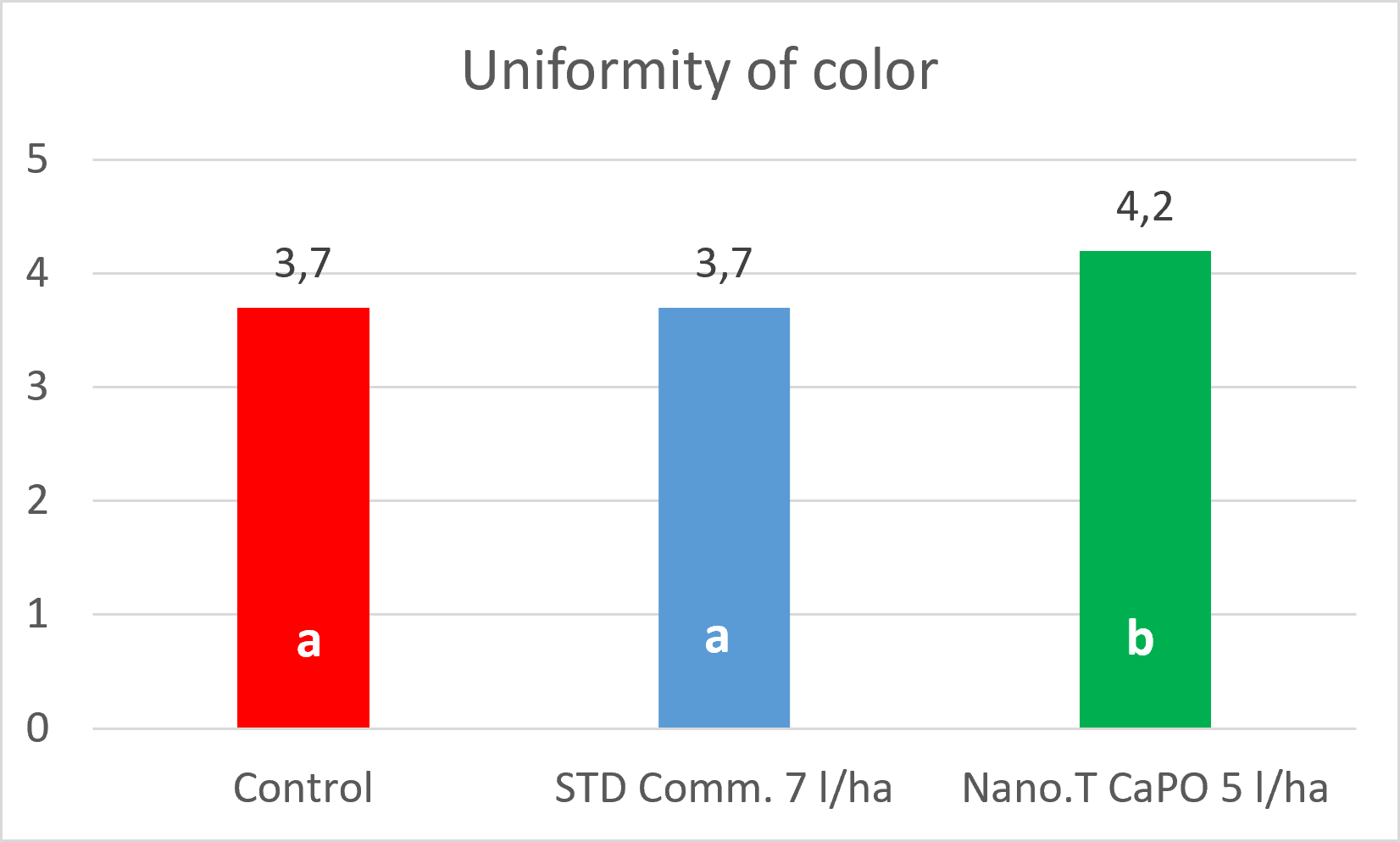
Nano.t CaPO offers all the advantages of traditional calcium, but with significantly greater efficacy due to its particle size, which allows for easy absorption through plant cell walls (regarding calcium content in the peduncle and fruit; see: Mingtao Zhu et al. (2024). “Preharvest nano calcium reduces the table grape berry abscission by regulating ethylene production during storage.” Journal of Plant Growth Regulation 43:1400–1409). Testing has shown:
- Excellent efficacy in terms of the shelf life of grape clusters: post-harvest, the berries remain crisp, and the number of berries detaching from the cluster is reduced by half. Signs of deterioration are significantly delayed.
- Benefits regarding quality and yield: improved yield per hectare, greater sweetness in the berries, and significantly more uniform coloration (see adjacent graph, p > 0.15).